
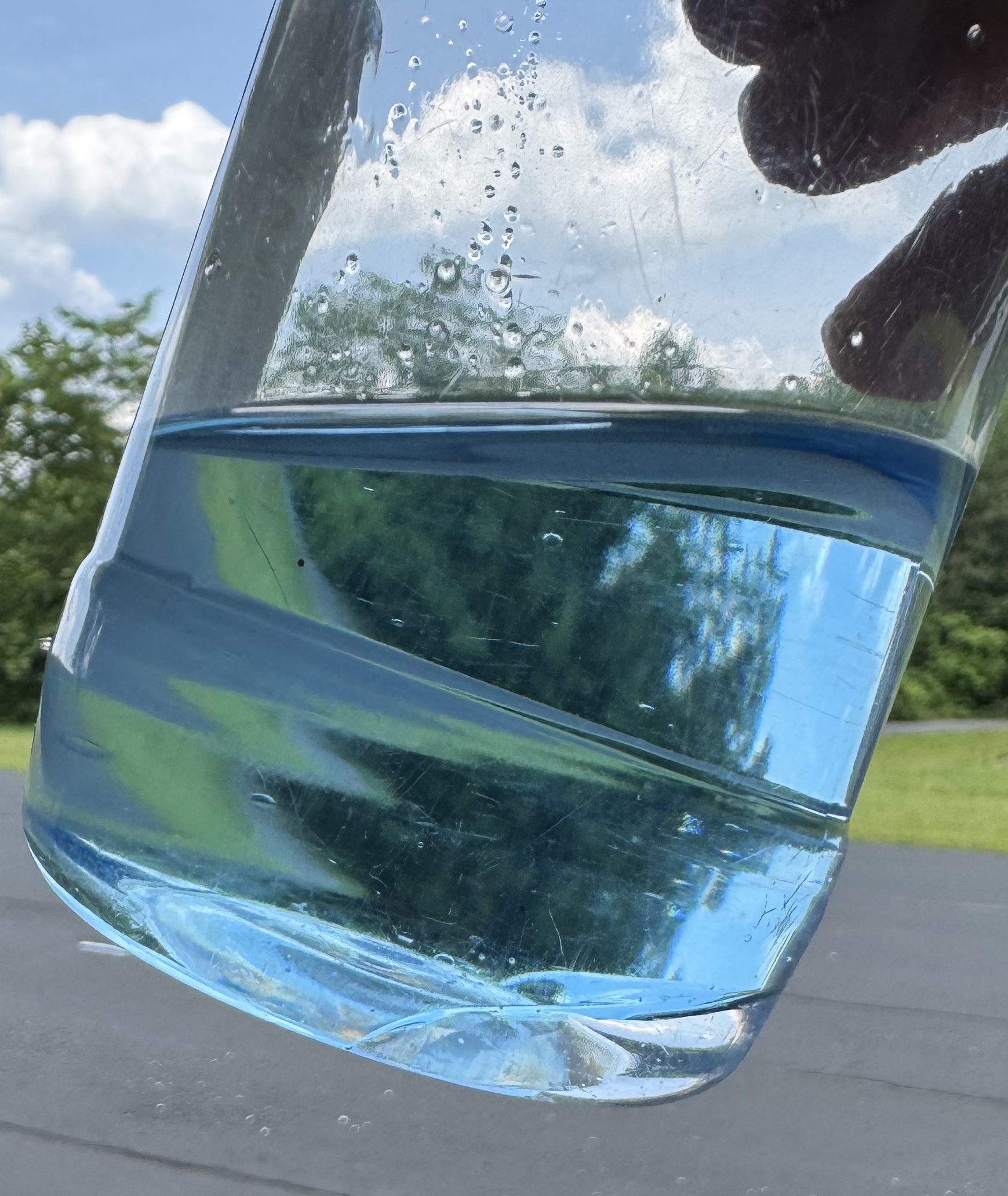
Water in blue 100 octane low lead fuel (100LL) looks exactly like an air bubble, but on the bottom of the container.
Since water is substantially more dense than avgas, it will sink to the bottom of the sampler in seconds. Any water taken in from a contaminated fuel source will try to go to the lowest point in the tank rather quickly after being introduced.
When stopping for gas on a cross-country trip, I will fuel, then make my way to the FBO for the “comfort stop’, then check the fuel. Even though it sinks right away, I’m more comfortable giving it a few minutes before draining the tanks. I don’t feel the need to wait an extended period.
Fuel tanks that have rubber bladders (1977 Cessna 182Q, for example) hold the possibility of wrinkles that can trap water away from the drain. The water can later find its way to the fuel line and on to the engine as the plane maneuvers. Some of these planes have ADs (Airworthiness Directives, i.e., mandatory procedures) on how to alleviate this threat, which may include rather vigorous shaking of the airplane wing or pushing the tail down.
Keeping the fuel tanks full or mostly full reduces the chance of water condensing from the air inside the tank as the ambient temperature drops at night. Fuller tanks also help keep rubber bladders healthy longer.
Keep an eye on the integrity of the fuel cap gasket as you fuel and check the fuel, especially if the cap is countersunk into the wing and the plane is exposed to rain or snow.
Note that water was added to the sample after draining it, for demonstration purposes.


 kershner flight manuals