
One of the most important parts of the preflight inspection, aka walk around, is the fuel check.
On many light planes, the lowest point in the system is forward of the firewall and is the last chance for contaminants (water or solid crud) to be removed before entering the carburetor or fuel injection system. This fuel strainer traps the unwanted material in its bowl.
Drain the wings first (higher) and work down to the lowest point in the system. If the lowest point is drained/checked first, there is the possibility of pulling bad stuff down into the line, which then won’t be caught when the fuel tanks are drained.
The 1977 182 is nice in that it only has 3 total drains: 1 for each of the two tanks and 1 for the fuel strainer. Some airplanes I’ve flown have 13 drains, 5 in each wing and 3 under the belly, terminating with the fuel strainer.
The wings are drained by inserting the prong of a fuel sampler into the valve and pushing upward to release a flow of gas into the clear, plastic sampler. The sampler has a screen to keep any solid contaminants from re-entering the system when the sample is poured back into the fuel tanks. One would never pour a sample contaminated with water back into the fuel tanks. Drain until the water no longer appears (and then some).
Some airplanes have twist valves for sampling. These are far better at ensuring fuel runs down your forearm as you turn them on and off.
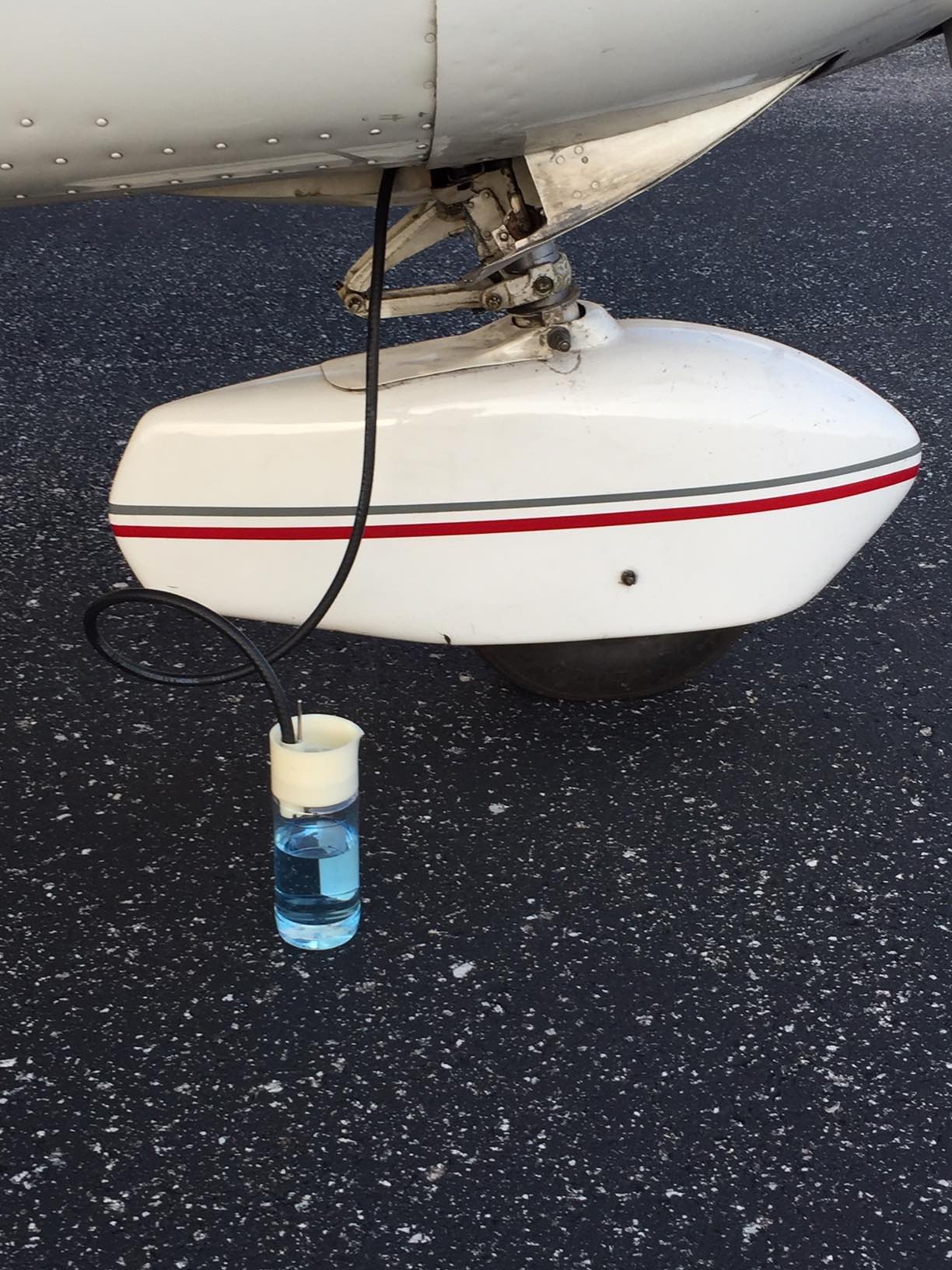
The strainer on this 182 is drained by pulling a small knob just inside the inspection panel on the left side of the cowling. This panel also gives access to the oil dipstick and a (sorta) view of the back of the engine. The problem is that the fuel strainer’s small metal drain tube is on the right side of the airplane’s belly. Fuel squirted onto the ramp is very difficult to inspect for water and other unwanted stuff, so I use a piece of fuel line bought from an auto parts store, which fits onto the hard drain tube and into the cap of the sampler, bypassing its screen (photo).
Be sure to take a large enough sample to fully drain the strainer, which on my plane holds about 3 ounces.
Always visually check the fuel quantity before each individual flight. There are tubes (dipsticks) calibrated for specific airplanes and differing fuel tanks available. Insert the tube, cover the top with a finger, withdraw the tube, and read the fuel quantity directly. I always have the tube on the outboard side of the tank opening and make sure it’s held vertically. This is for consistency of readings.
This 182 is 48 years old, which explains the exhaust stains and various nicks.

 kershner flight manuals